Shopping Cart


- -20%
Out-of-Stock



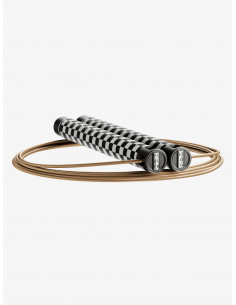


Skipping ropes and speed ropes for double-unders, cardio and coordination: at PRFRM you will find ropes from RPM Fitness, STRYVE, HYGEAR and Sveltus, from beginner ropes to competition speed ropes.
Skipping is one of the most effective forms of training for endurance, coordination and speed. A good skipping rope makes the difference: it turns more easily, stays on track and allows higher speed, especially for double-unders and in cross-training.
The most important points at a glance
RPM Fitness is known for high-quality skipping ropes. The Session range, for example the RPM Session4, offers lightweight aluminium handles, a flexible steel cable and a ball-bearing swivel mechanism for high rotation speed. For competition-level demands there is the RPM Comp4. Spare parts and cables are also available so you can use your rope for a long time.
The STRYVE Speed Rope in an all-black design is a slim speed rope for cardio and intervals.
The Hyrope takes a different approach from classic speed ropes and is suitable for cardio and muscular endurance.
A speed rope for getting started and training at home.
| Criterion | What to look out for |
|---|---|
| Rope type | Thin steel cable for speed and double-unders, thicker rope for beginners and technique |
| Handles | Lightweight handles with ball bearings for fast rotation, non-slip surface for a secure grip |
| Length | The rope should be adjustable: when you stand on the middle, the handles should reach roughly up to your chest |
| Subfloor | Jump on a mat, wood or rubber flooring, not on rough concrete, which protects the rope and your joints |
| Training | Speed rope for cardio and double-unders, heavier ropes for muscular endurance |
Stand with one foot on the middle of the rope. With the rope taut, the handles should reach roughly up to your chest or armpits. Shorter ropes are faster, longer ropes are more forgiving. Adjust the length to your level.
Start slowly and increase pace and duration gradually. If you have any complaints or pre-existing conditions, talk to your doctor or trainer first.
| Rope type | Properties | Well suited to |
|---|---|---|
| Speed rope | Thin, lightweight rope and bearing handles, high speed | Double-unders, cardio, cross-training, competition |
| Freestyle rope | Slightly heavier, better control | Tricks, technique and skill drills |
| Weighted rope | Heavier handles or rope, more resistance | Muscular endurance, shoulders and arms |
| Beginner rope | Thicker rope, forgiving of mistakes | Learning the basic jump and technique |
| Technique | How it works |
|---|---|
| Basic jump | Both feet jump at the same time, low and relaxed, with the rope turning from the wrists |
| Boxer skip | Easy alternation from one foot to the other, with a rhythm like in boxing training |
| High knees | Knees are raised alternately, increasing intensity and pace |
| Side-to-side jump | Jump sideways back and forth, trains coordination and balance |
| Double-under | The rope passes twice under your feet in a single jump, which requires speed and wrist strength |
| Week | Goal | Content |
|---|---|---|
| 1 | Consolidate the basic jump | 5 minutes of basic jumps, 3 times per week |
| 2 | Pace and rhythm | Basic jumps and boxer skips, 8 minutes, 3 times per week |
| 3 | Double-under attempts | Warm up, then 10 intervals of 20 seconds of double-under attempts |
| 4 | Linking | Basic jumps alternating with double-unders, 10 minutes |
The plan is an example. Adjust duration and rest to your level.
In cross-training, double-unders are a fixed part of many workouts. Boxers and martial artists use the rope for footwork, rhythm and fitness. For anyone who wants to train endurance, it is an alternative to running that needs little space. You will find more on cardio equipment in the Endurance training section.
| You are | This suits you |
|---|---|
| Beginner | A robust rope with adjustable length, for example the Sveltus Speed Rope |
| Cross-training or double-unders | A speed rope with bearing handles such as the RPM Session4 |
| Muscular endurance and variety | The HYGEAR Hyrope adds extra resistance to your cardio |
| Multiple goals | One rope for speed and one rope for technique or muscular endurance |
Increase duration and pace gradually and make sure you get enough rest between sessions.
Skipping ropes are an ideal complement to strength and endurance training. Find out more in the categories Endurance training and Functional Training, and Kettlebells for strength and conditioning to go with them.
What is the difference between a speed rope and a normal skipping rope?
Speed ropes have a thin, lightweight cable and bearing handles for high rotation speed, ideal for double-unders and cardio. Thicker ropes are slower and better suited to learning technique.
What rope length is right?
Stand on the middle of the rope: the handles should reach roughly up to your chest. For beginners, the rope can be slightly longer.
How do I learn double-unders?
Start with secure basic jumps and build up pace and height gradually. A speed rope with bearing handles makes getting started easier. Practise in short intervals.
How often should I skip?
To start with, two to three sessions per week of 5 to 15 minutes are enough. Increase duration and intensity gradually.
What is the best surface to skip on?
On a mat, a wooden floor or a rubber floor. Rough floors such as concrete put strain on your joints and wear the rope out faster.
Is skipping good for losing weight?
Skipping burns a lot of calories in a short time and is an efficient part of a training plan. Consistency and suitable nutrition are what matter.
Can I also use a skipping rope in an apartment?
Yes, if the ceiling height and space are right. Jump on a mat, which protects the floor, your joints and your neighbours from loud jumps.
How long should I skip at the beginning?
Start with 2 to 3 minutes at a time and take breaks. Slowly increase the duration to 10 to 15 minutes once your rhythm and technique are secure.
Which is better, skipping or running?
Both train endurance. Skipping saves space and time and also trains coordination. Running loads the joints differently. Many people combine both.
When should I replace the rope?
When the rope is visibly worn or no longer runs smoothly. With some speed ropes, cables and parts can be replaced individually.


